

Designer Diary: Behind the scenes of Tiberpunk: Streets of Rome
Three word pitch: 'Rome, but cyberpunk'

Today, it’s Tiberpunk: Streets of Rome, and it looks a bit like this:
A few years ago, it looked like this:
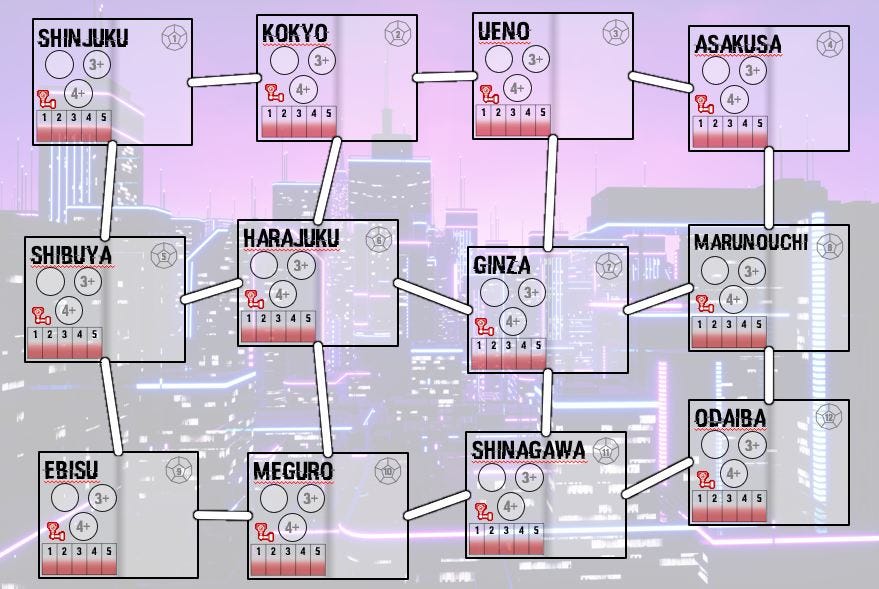
Along with my co-designer Robin David (designer of Trepanation, Letterpress, Tag City, Luzon Rails, Judean Hammer, and The Martian Investigations), Tiberpunk started as Wetware: a cyberpunk-themed, press-your-luck deck-builder. We tried quite a few things, and it’s always fascinating to see what makes it into the final game.
We knew we wanted the game to be a sandbox – a free-roaming game like Western Legends and others, one where there was no one winning strategy. There would be lots of different paths to victory that you could take, and they would all have you moving around the map, collecting items, completing missions, and building your stats up.
This was one of the first games where I worked with a co-designer, and I proposed something that I still use with some co-designers: a bit of ping-pong.
Since we were in different countries, this was not a literal game of table tennis. Basically, I would take charge of one version, present it, then turn over the next version to Robin. He would then be able to change the game as he liked, then present his version. It worked well, and it gave us both a chance to put our own touch on the game.
Early days
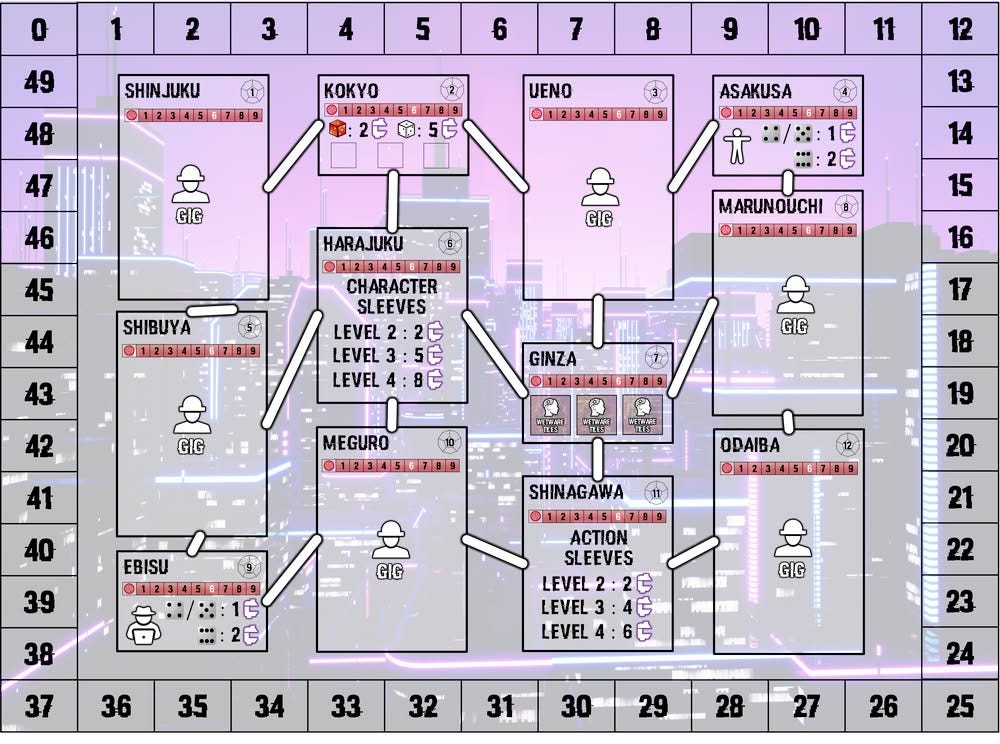
The board by itself tells part of the story – move around Tokyo, and what you could do was based on where you went. Gigs were in some places, and there was the ability to improve your deck abilities (at this point, they were ‘action sleeves’ and ‘character sleeves’) along with some other opportunities.
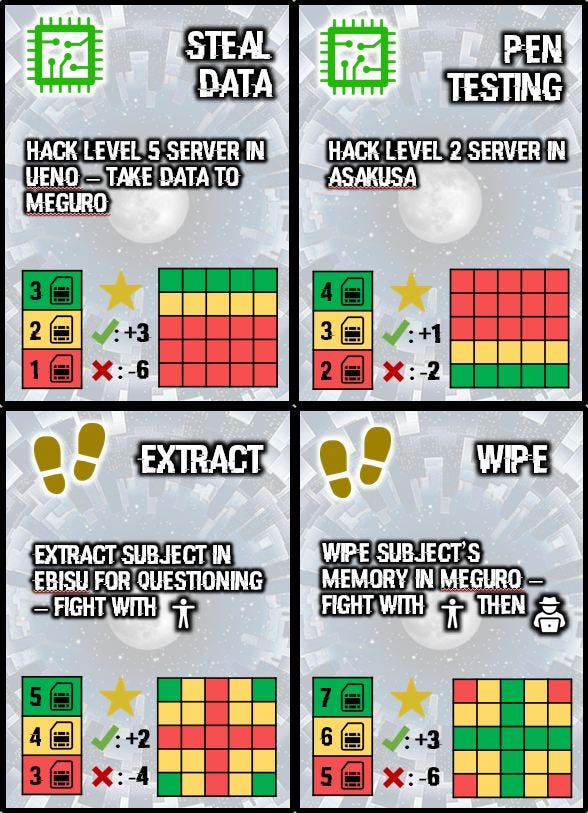
A few of the gig cards – the upper left showed whether it was a hacking challenge or a physical challenge. The 5x5 grid in the lower right corner corresponded with your alignment (as tracked on your player board). The better your alignment matched the gig’s expectations, the more points you’d score. You could claim a gig, then work to change your alignment before finishing the gig, or just try to do as many gigs as you could. Did you want to go ‘quality’ or ‘quantity’?
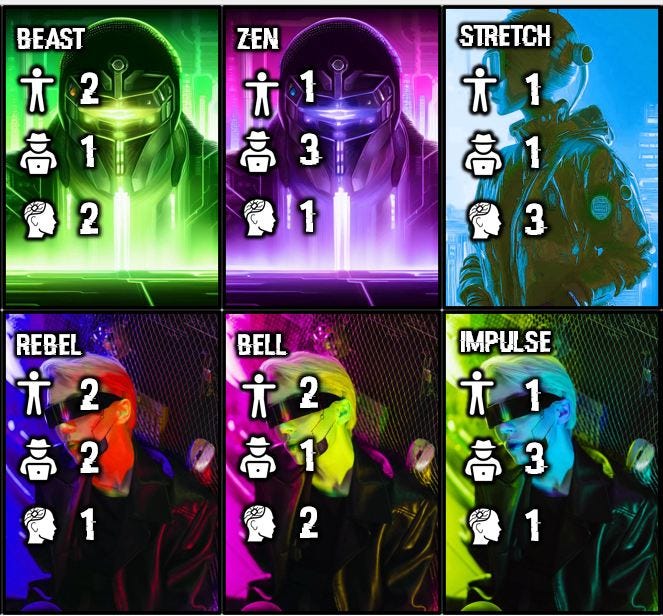
Also from version 3, these were some of the first character cards. You had three starting stats (from top to bottom: physical strength, hacking ability, and number of starting wetware upgrades). You had plenty of ability to upgrade them further, and they gave you a bit of asymmetry from the start of the game.
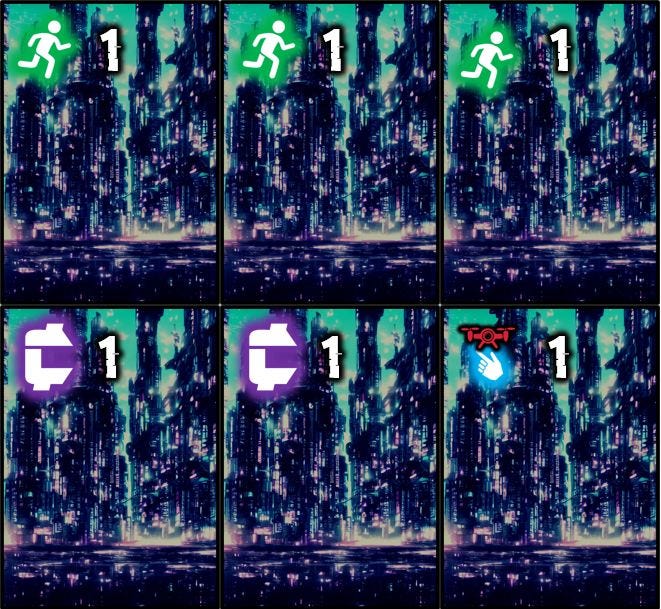
The 6 starting cards to start the game – 3 cards that let you move, 2 cards that gave you credits, and 1 card that lets you distract the drones throughout the cyberpunk world. You would draw 3 cards each turn, then choose the order to play them. The cards you purchased had better and more actions on them. (Later on, these cards would each give 2 actions to get a bit more action each turn.)
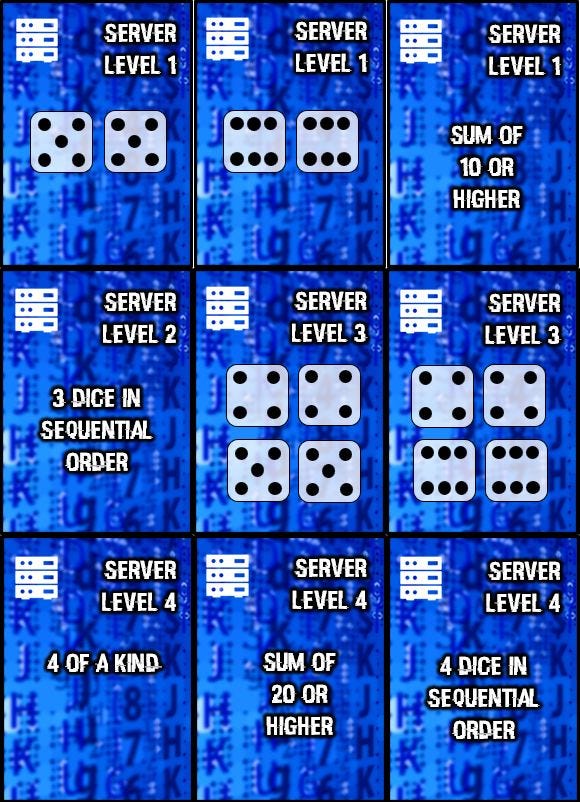
Some of the ‘server cards’ – when you accepted a hacking gig and arrived at the current location, you would draw a card and roll dice equal to one of your levels. This is where your wetware abilities would help out (they typically had let you manipulate or reroll your dice), but every time you ended your roll without succeeding, a drone would move one space towards you. Make sure you succeeded before you were caught or you’d lose some reputation!
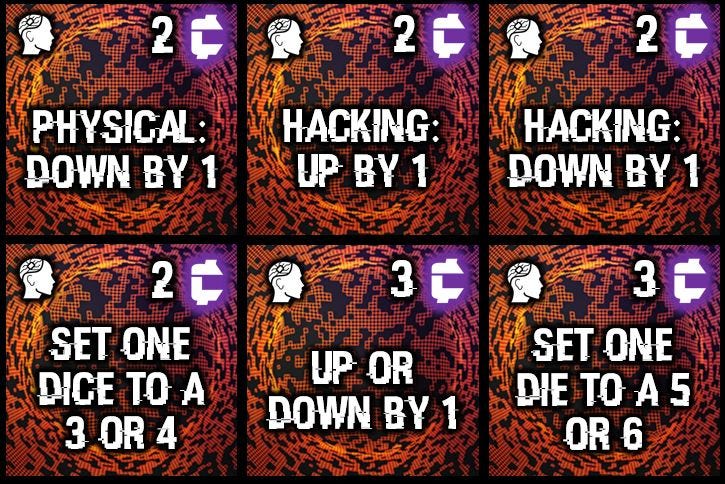
Some of the wetware manipulation upgrades – each was a permanent benefit, but could be used once per hacking attempt.
There were… lots of versions…
Both Robin and I made more than a few versions, and I’m not going to bore you with all the changes along the way.
The goal remained the same: a cyberpunk-themed game sandbox press-your-luck game where you could duke it out with your fists or your tech.
After iDVenture signed it, I learned they were looking to add the Rome angle to it. It sounded… kinda wacky, to be honest, but I was excited to see what they would pull off. It was out of my hands at this point, and while I was happy to reply to the publisher’s questions, they had plenty to create and develop along the way.
Which brings us full circle:
I’m really proud of this one, and it’s been fascinating to see what the publisher kept (and sometimes, what they changed or cut). I genuinely can’t wait to get my author copies and give the final version a go. Until then, there’s plenty of work to go on other games…!
Wow, this post is fascinating. It's so cool to see how other designers' processes work. You can definitely still see the original elements in the final game, but executed so differently. And of course, the name Tiberpunk is very clever! Good luck with the Kickstarter.
Thanks for sharing, it is an interesting example how theme can change once a game is signed. The cyberpunk Rome mesh seems to work...!